
 0
0
 0
0
A traditional painting may crack or fade, but the conservation goal is usually clear: slow the damage and preserve as much of the original object as possible. A contemporary installation creates a harder problem. It may contain projectors, plastic, plants, motors, food, software, fluorescent tubes, or ordinary shop-bought objects. Some parts are expected to decay. Others become obsolete while the artwork is still relatively new. When that happens, preservation is no longer simply a matter of repairing what is broken. Someone has to decide what the work is allowed to become.
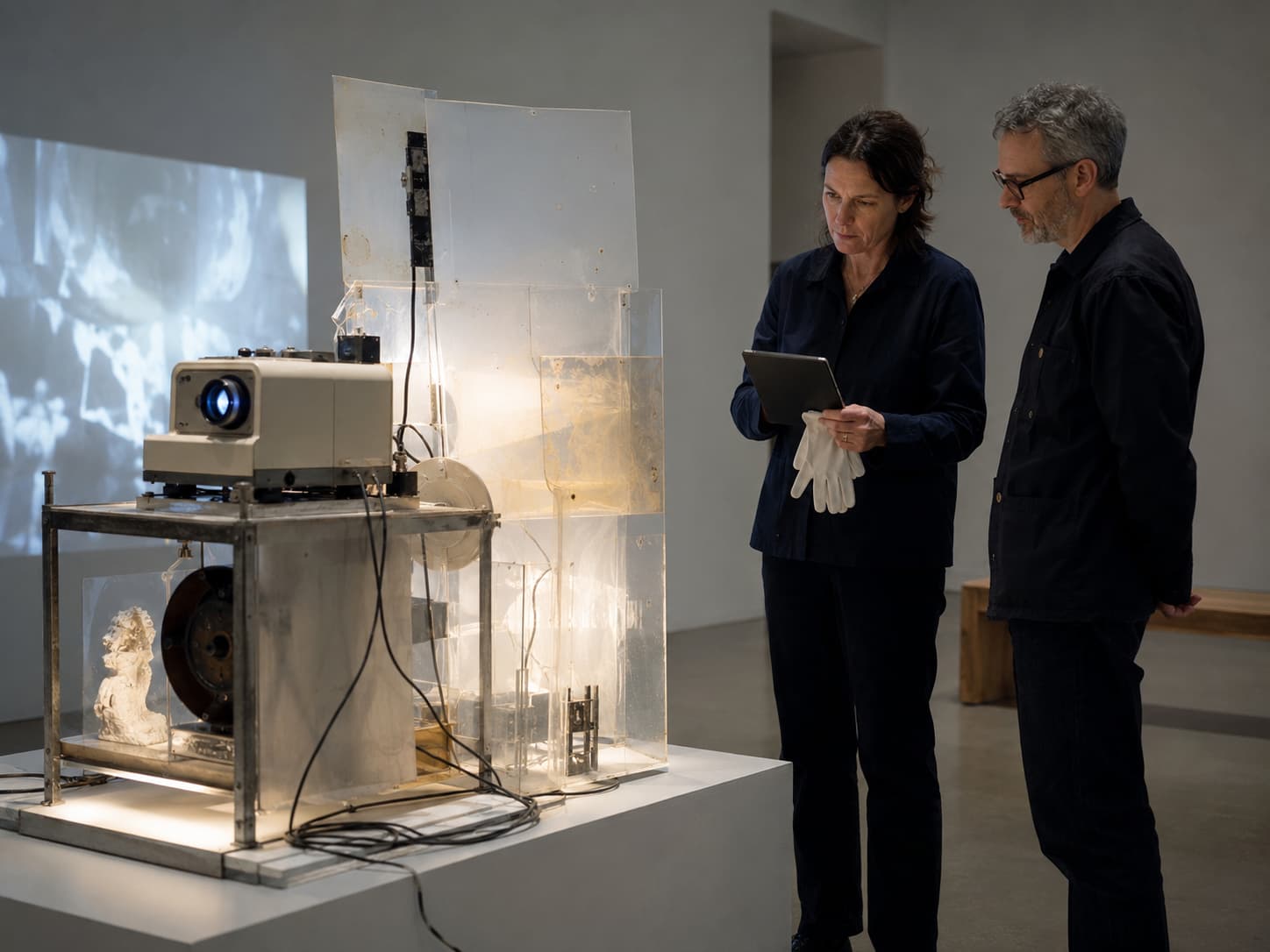
That decision rarely belongs to one person. Once an installation enters a museum collection, conservators, curators, technicians, rights holders, and sometimes the artist’s estate all become involved. The conservator studies what can survive. The curator considers what the work means. The technician knows which equipment can still function. The museum must also think about safety, cost, and whether future visitors will still recognize the installation as the same artwork. Contemporary conservation is therefore less like restoring one object and more like negotiating between material, intention, and time. Tate treats the artist’s intent as a guiding principle, but that intent still has to be interpreted and translated into decisions that others can repeat years later.
The first question is whether the original material is essential. If an artist uses a particular television, chair, bulb, or sheet of plastic, was that exact object chosen for its history and appearance, or simply because it produced the right effect? If it is historically specific, replacing it may erase part of the work. If it is only functional, refusing to replace it may make the installation impossible to show. Screens, projectors, storage formats, and software disappear from the market quickly, so Smithsonian conservation programs place heavy emphasis on documentation and detailed installation records.
An artist interview can clarify these distinctions while the artist is still available. Conservators ask which elements may be substituted, which dimensions must remain fixed, how bright a projection should appear, whether sound can be remastered, or whether a worn surface should be cleaned. The answers do not solve every future problem, but they establish priorities. Getty projects have used artist interviews because technical facts alone cannot explain what must remain unchanged for the work to retain its meaning.
The difficulty grows when decay is part of the work. Installations made from flowers, bread, leaves, fruit, soil, or living organisms may change visibly during an exhibition. In such cases, deterioration is not automatically damage. It may be the subject. Replacing dead flowers with fresh ones could preserve the appearance while destroying the work’s passage through time. Allowing everything to rot might respect the process but eventually make the piece impossible to exhibit. Getty case studies on biological materials show that museums must decide whether to maintain, replace, document, or accept disappearance.
Ageing can also alter a work in ways the artist never anticipated. Plastics yellow, rubber becomes brittle, adhesives fail, and industrial surfaces lose their finish. A museum can repaint, replicate, or replace these elements, but every intervention changes the balance between original matter and original appearance. A new replica may look closer to the first exhibition than the surviving object does, yet it contains none of that object’s history. The old component carries history, but may no longer communicate the visual force the artist intended. This is why authenticity in installation art cannot be reduced to keeping the oldest material. Tate’s research treats authenticity as a question involving change, loss, and the continuing identity of the work.
After the artist dies, the museum’s responsibility becomes heavier. Written instructions may be incomplete, assistants may remember different versions, and an estate may defend one interpretation while conservators see evidence for another. Earlier presentations may also have differed from one venue to the next. The museum must then reconstruct a decision from photographs, plans, interviews, exhibition reports, and the surviving components. Smithsonian institutions use installation reports, iteration records, and condition reports because each presentation becomes evidence for the next one.
Money inevitably enters the discussion. Preserving an obsolete projector, custom motor, or software environment can require specialists, spare parts, storage, and repeated testing. Replication may be cheaper, yet ethically questionable. Retiring the work protects it from a misleading reconstruction but removes it from public view. Conservation literature on variable media often returns to three options: maintenance, replication, or retirement. None is neutral, because each determines what future audiences will be allowed to experience.
The strongest decisions are collaborative and transparent. Museums need to record not only what they changed, but why. A replacement monitor should not quietly masquerade as an untouched original. A recreated organic element should come with documentation of its source and method. A software migration should preserve evidence of the earlier system. This does not diminish the artwork. It acknowledges that many contemporary installations survive through carefully managed change.
So who decides how a contemporary installation should age? No single authority can decide alone. The artist defines the work, but the material may resist the artist’s wishes. The conservator protects continuity, but cannot determine meaning in isolation. The curator interprets the work, but must respect technical reality. The museum owns responsibilities, not absolute control. The future of the installation emerges from negotiation among people, documents, materials, and repeated acts of judgment.
The goal is not to freeze the work at one perfect moment. It is to preserve the conditions that allow the work to remain itself while time continues to act on it. Sometimes that means replacing a component. Sometimes it means accepting fading or decay. Sometimes it means admitting that a work has reached the end of its displayable life. Contemporary installation art forces museums to confront a truth that older conservation practices often tried to avoid: preservation is never the absence of change. It is the careful decision about which changes the artwork can survive.